
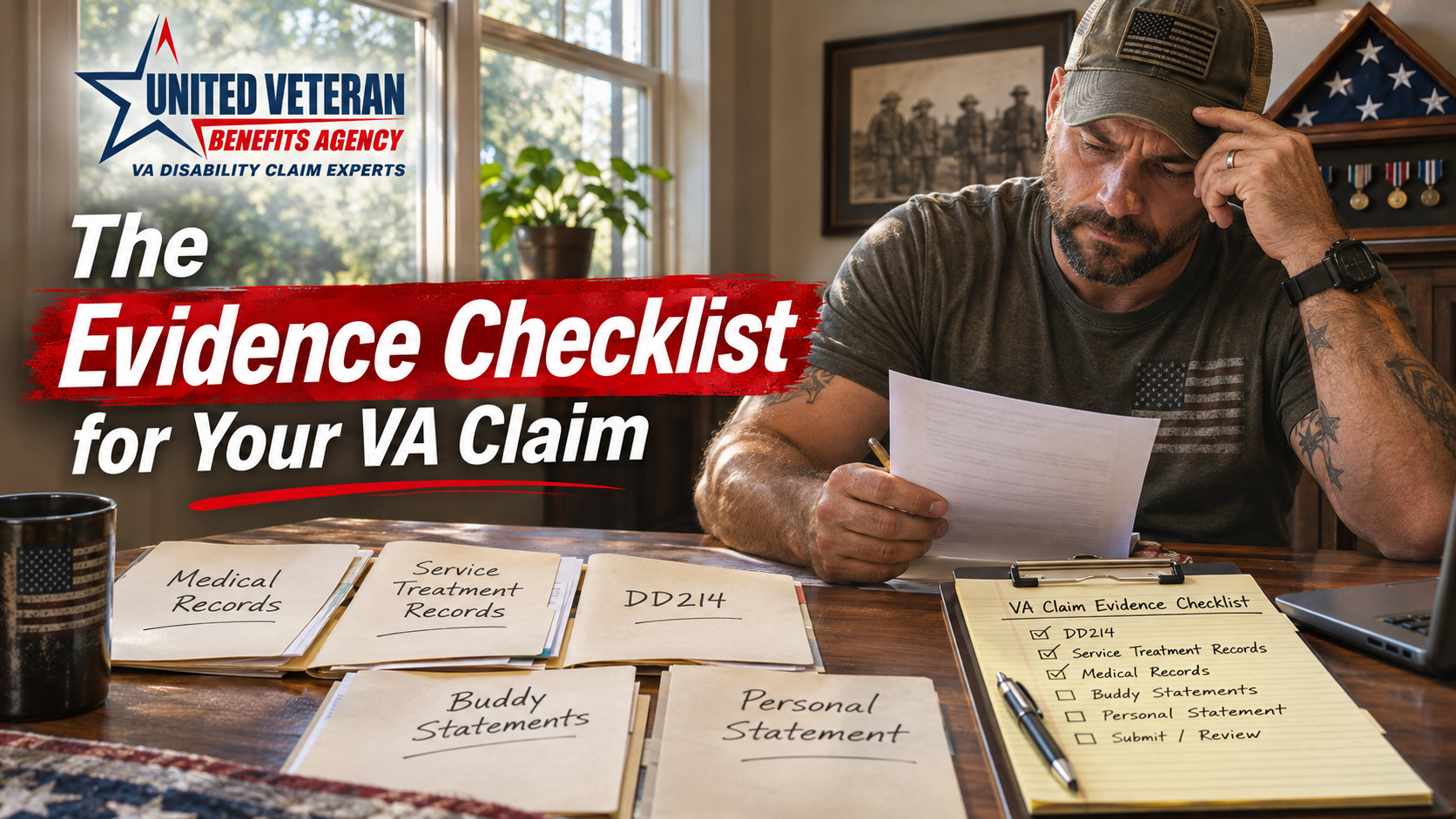

A VA claim rises or falls on what's actually in the file, not on how true a condition is or how much it affects your life. That can feel unfair, but it also means there's something concrete you can do about it: gather the right evidence before you file, or before your claim sits any longer without it. Here's a practical checklist to work from.
This is the part of a claim our team genuinely geeks out over. A missing detail here, one appointment that never made it into the file, a statement that's too vague to do its job, is so often the actual reason a strong case gets rated lower than it should. Catching that before it becomes a problem is some of the most satisfying work we do.
These establish that something happened during your time in service, or that your service put you in a position to develop a condition. Service treatment records, any incident or injury reports, and deployment or exposure history all fall here. If you're not sure what's already on file, it's worth requesting a copy of your full service treatment record rather than assuming everything relevant made it into your claim automatically.
This is usually the biggest piece. VA wants to see a timeline: when a condition started or was first treated, how it's progressed, and what's been tried. Every visit connected to the condition matters, not just the first one, and records from private providers outside the VA system don't show up automatically. You generally have to request those directly, so it's worth starting early. We go deeper into why this specific piece carries so much weight in Why Your Medical Records Matter More Than You Think for a VA Claim.
VA Form 21-4138, the Statement in Support of Claim, is where you describe your own situation in your own words: how a condition affects your daily life, work, and relationships, and anything the clinical records alone don't fully capture. This isn't the place to be brief for the sake of being brief. Specific, concrete detail (what a bad day actually looks like, not just "it's hard") is what makes a statement useful to whoever's reviewing it. We've sat with plenty of Veterans who froze up staring at a blank page here, and the breakthrough almost always comes from just talking it through out loud first, then writing down what was actually said.
VA Form 21-10210, the Lay/Witness Statement, sometimes called a buddy statement, is a statement from someone else: a fellow service member, a spouse, a close friend, anyone who's actually witnessed how a condition affects you. These carry weight specifically because they come from someone other than you, and they're especially useful for filling in gaps that medical records alone don't show, like how a condition shows up in everyday life outside a doctor's office.
If you were treated by a private provider outside the VA system, those records don't show up in your VA file automatically. VA Form 21-4142, the Authorization to Disclose Information, lets you give VA permission to request those records directly from a named provider on your behalf, which is often simpler than chasing them down yourself. VA records are usually easier to pull together through your own VA.gov or My HealtheVet account. Either way, it's worth confirming what's actually on file rather than assuming it's complete.
A vague statement ("my back hurts") does a lot less work than a specific one ("I can no longer stand through my kids' games without needing to sit down twice"). The same goes for timelines: dates, frequency, and specifics help a reviewer connect the dots instead of guessing. None of this needs to be polished or formally written. It needs to be clear and specific.
None of this evidence works in isolation. Service records establish the connection to your time in service, medical records show the condition and its course, and statements (yours and others') fill in what the paperwork alone can't. If your rating already reflects some of this but your situation has changed since, it may be worth looking at whether an increase makes sense, which we cover in When to Ask for a VA Rating Increase. And once you have a sense of what a stronger file could mean for your rating, our VA disability calculator is a good way to see where the numbers could land.
This is exactly the kind of work our team lives for: going through a file with real fine-tooth-comb thoroughness until every genuine gap is accounted for, not just skimming for the obvious ones. With more than 90 years of combined experience across our specialists, we know what a reviewer is actually looking for, and we'll sit down and listen to your full story before we ever touch a form. We're not VA accredited, and we don't file or represent claims before the VA, but we'll make sure the evidence that should be in your file actually gets there.
Every claim is different, and gathering strong evidence doesn't guarantee a specific outcome. It does mean your claim is working from the strongest version of your actual story.
👉 Have our team review your evidence