
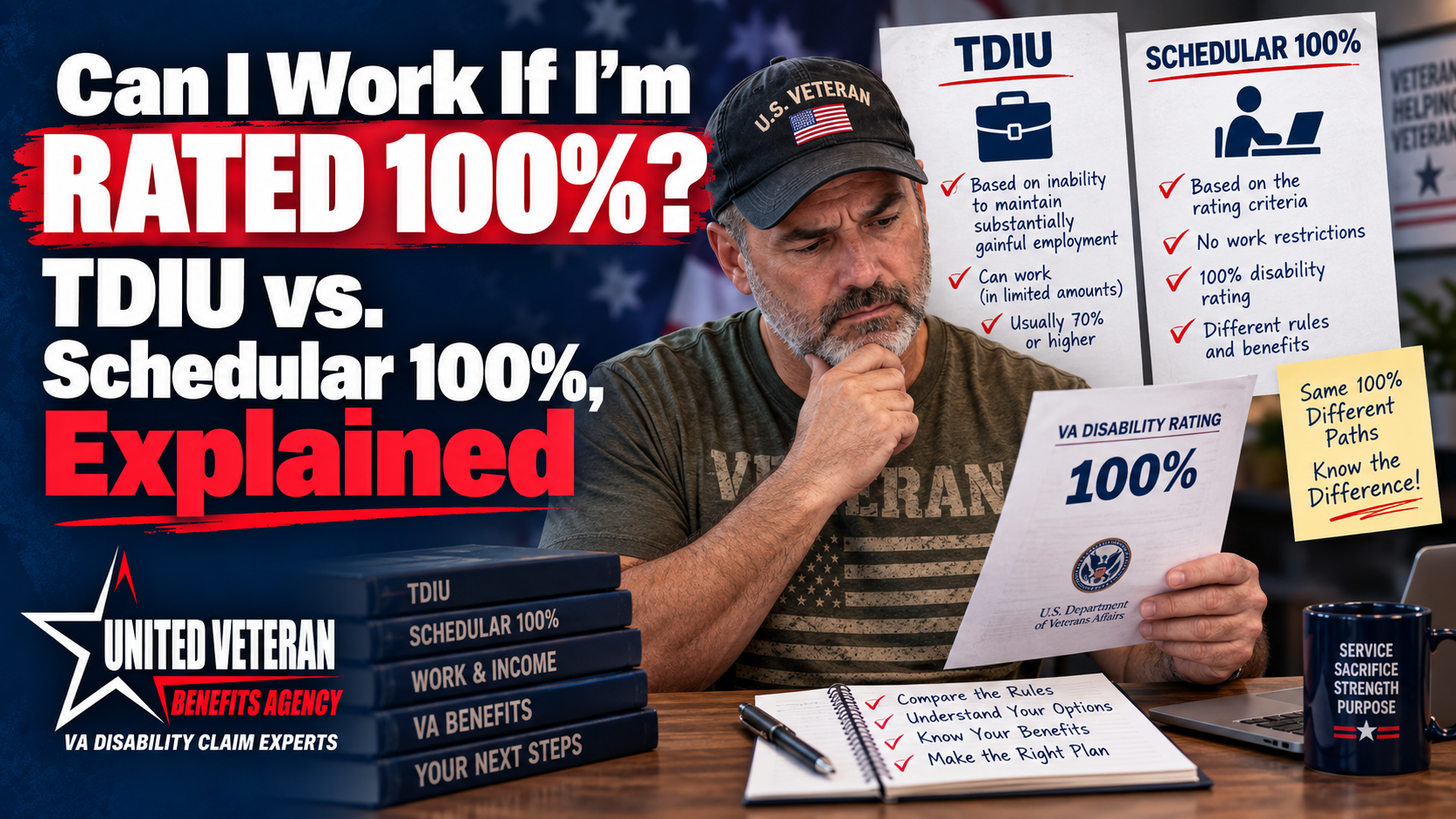


This is one of the most common questions our team gets, and one of the most commonly misunderstood: if you're rated 100% disabled, can you still work? The honest answer is that it depends entirely on how you got to 100%, and that distinction trips up a lot of Veterans.
Not all 100% ratings are the same underneath. There's 100% schedular, where your combined disability rating adds up to 100% based on the VA's rating schedule. And there's TDIU, Total Disability based on Individual Unemployability, where your combined rating is below 100%, but the VA pays you at the 100% rate anyway because your service-connected conditions prevent you from holding down substantially gainful work.
Both pay the exact same monthly compensation. The difference isn't in the check, it's in the rules attached to it.
If your rating is 100% schedular, there's no restriction on your ability to work. You can hold a full-time job, run a business, or do whatever work you're able to do, and it doesn't put your compensation at risk. The rating reflects your disability level, not your employment status.
TDIU is different, because it's built entirely around the idea that your conditions prevent substantially gainful employment. That doesn't mean zero work. The VA allows what's called marginal employment, generally work that keeps your income below the federal poverty guideline for one person. Earn below that line, and you can still work while keeping TDIU. Earn at or above it consistently, and the VA can determine you're capable of substantially gainful employment, which puts your TDIU status at risk.
There are some exceptions, including for sheltered or protected work environments, but the general rule is straightforward: TDIU comes with a real income ceiling, schedular 100% doesn't.
It can, but it isn't automatic. A Veteran has to specifically apply for permanent TDIU status and show that their conditions aren't expected to improve. Even without permanent status, the VA doesn't typically reevaluate TDIU constantly, but it can review your case, including checking income data, and reduce or end TDIU if it finds clear evidence you're now capable of substantially gainful work. Schedular 100% doesn't carry that same ongoing employment scrutiny, since it was never tied to your ability to work in the first place.
Outside of the work rule, TDIU and schedular 100% are treated the same for most of the benefits that come with a 100% rating, things like healthcare priority and dependent education benefits generally follow the 100% rate itself, not which path got you there. The work restriction is really the one major difference that actually changes what you can do day to day.
"100% means you can never work again" is one of the most common things our team hears, and it usually comes from someone who's only ever heard about TDIU rules and assumed they apply across the board. They don't. If your 100% came from your combined schedular rating, work isn't the risk factor it is under TDIU.
Knowing which kind of 100% you have, or which one actually fits your situation, changes real decisions: whether to take a job offer, how many hours to work, whether to ask about permanent TDIU status. Our team has 90+ years of combined experience actually working through VA ratings, made up of Veterans, military spouses, and family members who've lived this process themselves, not just processed the paperwork for it.
We're not VA accredited, and we don't file or represent claims before the VA. What we do is help Veterans understand exactly which rules actually apply to their situation, so a decision about work doesn't accidentally put their benefits at risk. If you're weighing a job offer against a TDIU rating, or you're not sure which kind of 100% you actually have, that's exactly the kind of question worth asking before you act on it, not after.
Every situation is different, and this isn't a substitute for a direct look at your own file. But you don't have to guess at rules that could affect your income.
👉 Ask our team about your situation