


Maybe your records aren't gathered yet. Maybe you're waiting on a specialist appointment before a diagnosis is even official. If you're not ready to file a full VA claim right now, it's worth asking whether that waiting actually costs you anything. For a lot of Veterans, the answer is yes, unless they know about one specific, free step first.
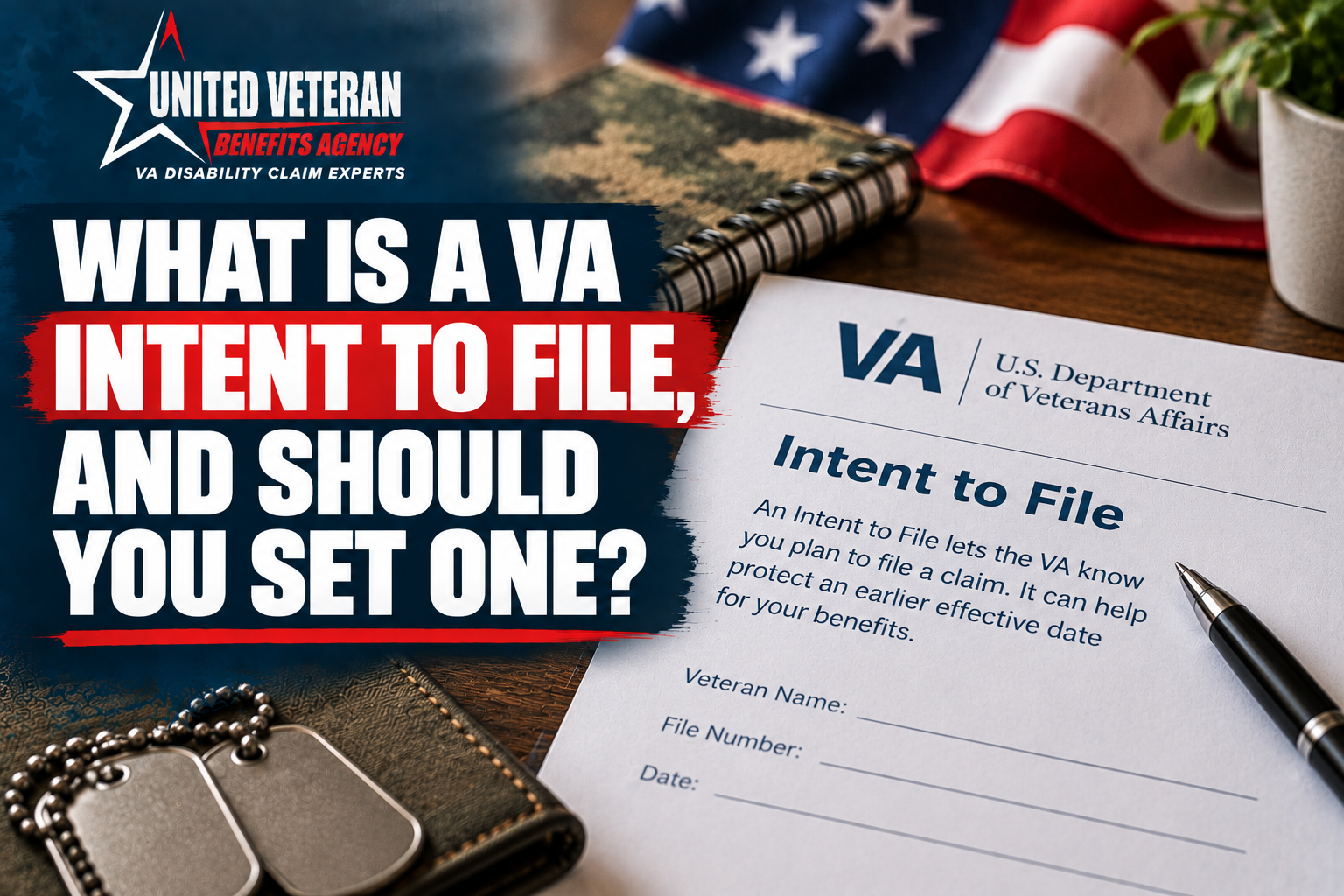
An Intent to File, usually shortened to ITF, is a way of telling the VA you plan to file a claim before you've actually finished pulling everything together. Think of it as holding your place on the calendar. It isn't a claim itself, and it doesn't require you to name specific conditions or submit any evidence yet. It just marks a date.
This is the part worth understanding clearly. If you submit your complete claim within one year of setting an ITF, your effective date can go all the way back to the date the VA received that ITF, not the later date your full claim actually went in. We cover exactly what an effective date is and why it matters in VA Effective Date Explained, but the short version here is that an ITF can protect an earlier start date while you're still doing the work a strong claim actually needs.
Miss that one-year window, though, and the ITF simply expires. The VA takes no further action on it, and filing a brand new ITF afterward only creates a new date going forward. The earlier one can't be recovered.
Say gathering your records and getting a diagnosis takes four months. Setting an ITF on day one instead of waiting until everything's ready could mean an effective date four months earlier than it would otherwise be, which, depending on your eventual rating, could mean real money in back pay. This is an illustration of how the mechanics work, not a promise of what any specific claim is worth.
It's worth checking current submission methods directly on VA.gov before relying on any one of these, since VA occasionally updates how its own forms and online tools work.
An ITF isn't a claim, and it doesn't prove anything on its own. It doesn't guarantee a condition will be approved or that service connection exists. The one-year clock keeps running regardless of what else is happening in your life, and it only covers one general benefit type at a time, so compensation, pension, and survivor benefits each need their own.
An ITF buys time. It doesn't replace the work of building a strong claim. Records, a documented diagnosis, and statements describing how a condition actually affects daily life are still what the eventual claim rests on. If a claim has ever come back denied despite evidence being submitted, our post on why that happens and what it usually means covers the most common gaps.
Our own Katie McCurdy puts it simply: "Don't wait. If you need to wait, make sure you have an ITF set."
We're not VA accredited, and we don't file or represent claims before the VA. What we do is go through a Veteran's situation with fine-tooth-comb thoroughness and help figure out what's actually worth filing, in what order, and when an Intent to File makes sense as a first move rather than jumping straight to a claim that isn't ready yet. Our team stays with you every step, not just for the first form.
Every case is different, and nothing here promises a specific outcome for your situation. If you want to see how a future rating could add up, our VA disability calculator is a good place to start.
👉 Talk to our team before you file